Mostrando entradas con la etiqueta Exotic India. Mostrar todas las entradas

domingo, 14 de agosto de 2011

Is There a Rebirth? The Vedological Approach


exoticindia.es


----- Original Message -----
To: 
Sent: Friday, July 15, 2011 6:04 PM
Subject: [SPAM]: Is There a Rebirth? The Vedological Approach

JULY 2011
ARTICLE OF THE MONTH
Is There a Rebirth? The Vedological Approach

The world was created by God. However, what was the need for Him to create this immense universe of unimaginable complexity? This is the question. Suppose one says that God was bored by loneliness and in order to get rid of this boredom He indulged in creation. This then would imply that God is also a victim of dissatisfaction and boredom like us. On the other hand if it is said that there is no specific reason for creation then this would imply an unsound mind because doing anything without a purpose is a sign of an unbalanced mind. It is only a mad person who cries or laughs or runs without any reason (Brahma Sutras 2.1.32). Obviously, none of these could possibly be accepted. What then is the way out?
 
We all know that no kind of any dissatisfaction or boredom is possible in God because He is the nature of bliss itself (Ananda). Further, the charge of an unsound mind also does not stick because God’s creation is unimaginably mysterious, complex and coordinated.  Therefore, His act of creation is not the result of an unsound mind, in other words, it is not without a purpose.
 
Query: God did not create the world for Himself; nor was this created without a reason. So, why did God create the world at all?
 
Reply: The Vedas answer this question by saying that the creation of the world is for the sake of the Jivas. It is similar to the father preparing a toy for his child.
 
Question: How can that be? According to the Vedas, creation is a process having many stages. For example, first the five elements (sky, air, fire, water and earth) are created and so on. The creation of the Jiva is only the last stage in this process. Then how do you say that this creation is for the sake of Jivas only?
 
Resolution: It is this way: the Jivas exist even before creation. Just as a pregnant woman knits socks and gloves for the child to be born, so does God create the material universe for the sake of the Jivas to be born.
 
Doubt: How can we believe this when we are actually seeing new Jivas being born?
 
Resolution: What we see is only the birth of the gross body. However, the Jiva is different from it. He is not visible.
 
Further Doubt: How can we say that the Jiva is different from the body?
 
Answer: When we are awake, we say that we are moving only when our body is moving. We say we are lying down when the body is lying down. This is because we mistake the body for ourselves. However in dreams, even though the body continues to lie on the bed, our experience is that we are wandering elsewhere. This experience would not be possible if we were not different from the body. Moreover, we know that today various organs of the body which are malfunctioning, are being replaced by inert replicas or just amputated and thrown out, or even being replaced by other organs. But the individual continues to feel that he is the same. In this way, the individual does not change even though the gross body is completely being changed. All these observations confirm that the Jiva – our very own self – is different from the body. But, when the Jiva acquires the gross body, one thinks he is born and when the Jiva leaves the body, one thinks he dies.
 
Doubt: This is a convincing proof for the separateness of the Jiva from the gross body. But still I could say that the Jiva is born with the gross body. In that case, the reason for the creation of the world remains unexplained. It could be explained only if the Jiva existed even before the birth of the gross body. How can that be proved?
 
Resolution: Notice that you need practice for even simple activities like cycling, singing or swimming. No one can do anything without practicing. But on the other hand, a newly born child successfully suckles from the breast of the mother. This action implies that the child is aware of its hunger and has the knowledge of the milk, which mitigates hunger. It also implies a knowledge of the location of the milk and the practice of suckling it. Clearly, the child didn’t practice the suckling now. So it must have practiced it before its birth, i.e. in its previous lives. In fact, we have a multitude of such examples, some of which are as follows:
 
1). During winter, birds migrate from the Polar Regions to warmer locations thousands of miles away. For example, Siberian birds fly to Bharatpur in Rajasthan, Ranganthittu in Karnataka and Vednatangal in Tamil Nadu. They fly at dizzy heights of about 30,000 feet and reach the same locations every year and return to Siberia by summer. How do they find their way? Scientists say they are guided by the stars, a perplexing knowledge of astronomy indeed for a bird!
 
2). There is a sea creature living in the Japan sea, when it becomes pregnant it travels along the coast, crosses Indonesia, Burma, Bengal and comes to the beaches of Orissa. It waits in the sea till night. Then it enters into the beach and digs a hole and lays its eggs, covers them with sand and goes back. When the chicks come out, they also wait till the night in their burrow. One of them then peeps out to verify that there is nobody to harm them. Then in one leap, it springs into the sea and all the other chicks follow it. These chicks go back to the Japan Sea after crossing Bengal, Burma, Indonesia and Thailand along the coat. Who has taught them the way?
 
3). A lizard can dexterously catch the flying flies the moment it comes out of the egg.
 
4). In the case of human, there are child prodigies in music, science, mathematics and so on. This would be impossible if had there been no previous life in which they would have undergone the appropriate practices.
 
This shows clearly that the Jiva must have existed even before the birth of the gross body and God creates the universe for the Jiva’s sake, so that the latter can reap the fruits of Karma done in his previous lives.

Rebirth and Vedic Activity

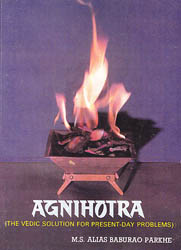
Agnihotra – The Vedic Solution for Present-Day Problems (A Rare Book)


The concept of life after death has been the basis of all activities laid down in the Vedas, be it Agnihotra


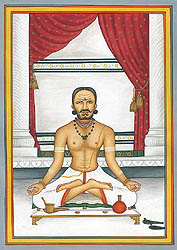
A Brahmin Doing Sandhya Vandanam


or Sandhya Vandanam.


Whether it is Puja, Bhakti, charity or good conduct (Sadachar), everything stands only on this basis. Wise people have said that a comfortable living results from charity, intelligence from serving elder people, and longevity in life results from Ahimsa (non-violence).
 
Judged solely on the basis of the mere action only, charity leads to a loss of money, serving our elders results only in exhaustion and perhaps even a rebuke from the served, and Ahimsa leads to discomfort. Even then, people indulge in these actions in the hope that sometime later they would yield promise beneficial results. Since it may not be possible to enjoy the fruits of these actions in this present life itself, it would presuppose another life after this. Otherwise this Karma would be meaningless.

The Question of Heaven and Hell

Some people who believe in life after death say that heaven (Swarga) is the reward for all these good actions and Naraka (hell) is the punishment for all our bad actions. After death, those have performed meritorious deeds (Punya-Karma) go to Swarga and those who have indulged in sinful activities (Paapa) go to Naraka. In the view of such people, accepting heaven and hell is sufficient enough to explain our present Karma, and there is no need for rebirth in this world.
 
There may be room for this doubt if this question is viewed only superficially. But even a little reflection will demonstrate that this cannot be right. Any fruit should only be in proportion to the Karma. Therefore, for a permanent stay either in Swarga or Naraka, one should have obviously done limitless Punya or Paapa. How is possible to limitless Punya or Paapa in a limited life span? There are many people who do neither Punya nor Paapa. They just live and die. Where should they go after death? Some babies die immediately after birth. Where do they go, to Swarga or Naraka? Someone may say: “If he is born in our religion he will go to Swarga. If born in another religion he would go to Naraka.” This is obviously not correct since nobody is born in a given religion by his choice. If they were, nobody would take birth in other religions at all. If you say God is responsible for one’s birth in a given religion, then it would invite the charge of prejudice and bias on the part of God. What about people who were born before the birth of these religions? Can any sensible person say that all invariably went to hell? If the routes to heaven and hell are only one-ways, then would they not become overcrowded in due course? In fact, more basic questions are: why should God give even the present birth? Why has he kept different people at different levels of pleasure and pain? Why are some Jivas born as human beings, while some others are born as animals and birds and some even as worms in filth? Therefore, any theory not accepting rebirth is palpably absurd.
 
Finally, to solve this issue, it is the scriptures again which invariably come to our rescue. According to the Vedas, the Jivas experience only the ‘special’ Punya and special Paapa in Swarga and Naraka. For the remaining ordinary good or bad deeds, they have to come back to the earth, after having completed their tenure in Swarga or Naraka. If this is correct, then obviously the Jiva who has to go these two worlds has to be different from the gross body. He must be going there with some other subtle body (see Exotic India,
Article of the Month, June 2011). This is because the gross body is reduced to ashes here in this world itself.

The Question of Instinct

An Objection: You have said that the spontaneous actions of newborn animals like suckling or swimming or flying are evidences of the existence of the Jiva prior to the birth of the body. Can we not say that these activities are just instinctive and thus do not prove the pre-existence of the Jiva?

Reply: Of course there is no objection to giving the name ‘instinct’ to these actions. But on the other hand, when you are asked for the reason for doing something without having practiced it before, you call it as instinct, and when you are further asked what ‘instinct’ is, you will say that it is the ability to do something without practice. This is not scientific logic. You may call it as instinct, but you still have to explain the reason for this instinct. The reason, as has been stated by the Vedas, is the practice done in previous lives.

Doubt: On this basis, a Jiva born for the first time as a monkey cannot have the monkey’s instinct. How can this be explained?
 
Resolution: The scriptures say that there is nothing like the birth as a monkey for the first time. Since infinite past, Jiva has been taking innumerable birth in all species – not only as a monkey. Therefore, every Jiva is already having the instincts of every specie.
 
Objection: In that case, how is that one sees a monkey’s instinct only in a monkey, and man’s instinct only in man?
 
Answer: Oh no. You can certainly notice a monkey’s instinct in man also! However, it is true that man may not be able to jump from branch to branch and a monkey cannot talk. This is because an appropriate body is required for a particular instinct to express itself. For example, even though one may be an expert cook, he cannot cook without implements like vessels, hearth and so on. Though one may have the instinct to see, one cannot see if there are no eyes. Men will have women’s instincts and women men’s. In fact, we notice that many times during old age, men develop breasts and women beards. Nevertheless, in order to deliver babies the Jiva should certainly have the female body. Don’t we see that in old age one cannot indulge in sensual pleasures, though the desire could still be there? We see animals being trained to play like humans in a circus. How is this possible if they don’t have these instincts? Therefore, the scriptures clearly state that the Jiva has already taken infinite number of births in every species, thus conclusively establishing rebirth as the most significant part in the cosmic scheme of things.

Warm Regards,

Nitin Kumar
Editor, Exotic India

Click Here to View Printer Friendly Version (pdf)

Click For Our Past Newsletter Articles


This article is based almost entirely on the teachings of Param Pujya Swami Paramanand Bharati Ji. However, any error is entirely the author's own.


References & Further Reading:

Bharati, Swami Paramananda. 
Foundations of Dharma, Bangalore 2008.

Bharati, Swami Paramananda.
Vedanta Prabodh, Varanasi, 2010. 


TABLA - FUENTES - FONTS


SOUV2BalaramScaGoudyFOLIO 4.2Biblica Font


free counters


Disculpen las Molestias


Altering Fate: The Transforming Power of Karma


exoticindia.es

 
----- Original Message -----
To: 
Sent: Wednesday, June 15, 2011 6:06 PM
Subject: Altering Fate: The Transforming Power of Karma

JUNE 2011
ARTICLE OF THE MONTH
Altering Fate: The Transforming Power of Karma

Can we alter the fruits of a particular karma through another karma? Certainly. Only the second karma needs to be of the nature of an antidote to the original karma. A good karma can be annulled by a bad karma and a bad one by a good one. Whenever a pleasant situation arises in our life it is due to our punya (meritorious deeds), and whenever there is grief it is due to our sins (paap). The moment there is grief in our lives we want to do something to annul that grief. The karma required for this is known as ‘Prayashchitta’ (atonement). Prayashchitta basically means a prescribed penance for atonement and is made up of the following three components:
 
1). Chanting (Japa)
 
2). Charity (Dana)
 
3). Fasting (Upavasa)
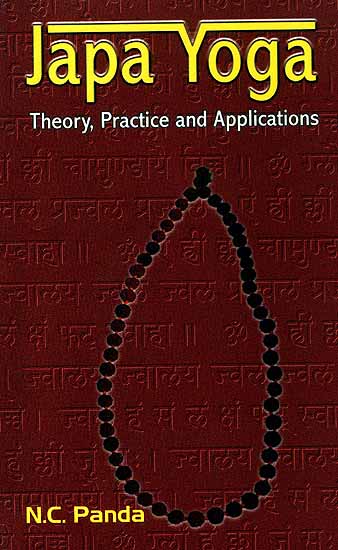

Japa Yoga (Mantra Yoga) (Theory, Practice and Applications)
Any atonement differs only in the quality and quantity of these three aspects. One may have to do more fasting or less fasting, do this thing or that thing in charity or do this Japa or that Japa and so on. However, fasting and charity cannot be done by everybody. A diabetic patient or a person with stomach ulcer cannot fast. A poor man cannot give to charity. But there is no such constraint on chanting. The ancient scriptures relax even the rules of Japa to facilitate anybody to do it. If one cannot sit on the floor, he or she can sit on the chair; and if even that is not possible one may lie down and do Japa. Therefore, everyone, for everything – either to get rid of sins, or to acquire merit, should resort to Japa.


Doubt: But many times, even after performing the atonement prescribed in the scriptures and also doing meritorious deeds (punya karma), one does not get rewarded. Sometimes we also hear that whatever is written in our fates cannot be got rid of. It has to be but spent through experience. How can we explain this?
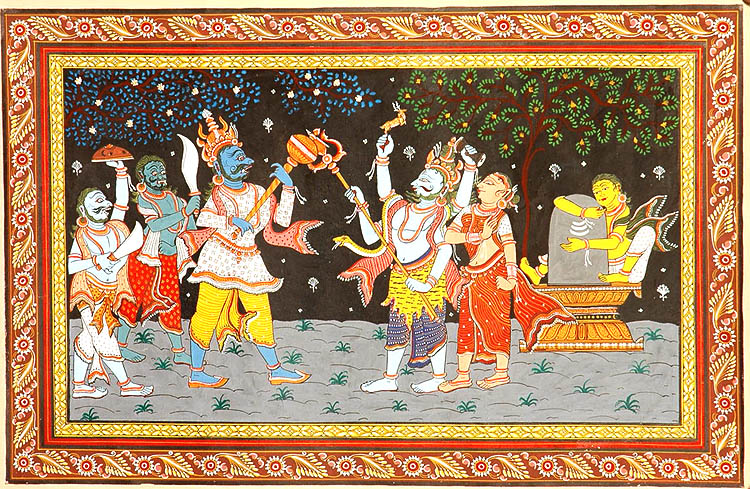
Shiva as Kalantaka Saves Rishi Markandeya
Resolution:
What we call as fate is after all the result of our own karma done in previous lives. Of course, we do not know how much or what exactly it is. Nevertheless, it has to be experienced. However, it is possible to rectify it through Prayashchitta. For example, Markandeya who was destined to die at the age of eight overcame it and lived long.
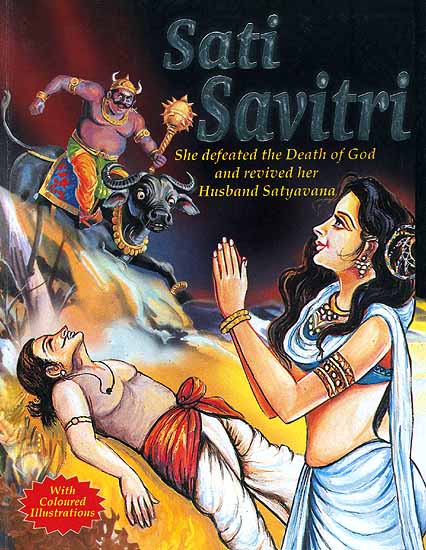

Sati Savitri (She defeated the Death of God and revived her Husband Satyavana)


Savitri whose fate had widowhood in store for her, overcame it through her penance.


However, many times common people will not be able to perform that much amount of penance necessary to overcome fate or destiny. The penance may be lacking in its quality or quantity or both. Shri Veda Vyasa says that for the complete result of a karma to manifest itself, the following three are necessary:
 
a). Concentration of mind
 
b). Correctness in the performance of karma, and
 
c). Dana.
 
Sometimes when we do not succeed, it would be wrong to conclude that destiny cannot be mitigated. Rather it means that we have to step up the quality and quantity of our penance.
 
Further Doubt: Then how do we understand the statement that whatever is written in destiny cannot be avoided?
 
Resolution: It works like this: The trouble that one undergoes doing penance itself accounts for the grief to be experienced according to our destiny.
 
Question: Then which is better – facing destiny as such without any Prayashchitta or experiencing it through the Prayashchitta to overcome our fate?
 
Answer: It depends upon one’s attitude. People with Vairagya, meaning those who have become disenchanted with material life and want to leave karma to concentrate exclusively on Moksha, are the ones who face whatever is their fate and do not bother to perform any Prayashchitta. This amounts to undergoing pain voluntarily for a higher cause. Therefore, this itself is penance. However, common people should not do this. They have various duties to attend to. Therefore, they should overcome it by doing the penance of Prayashchitta. This will not only mitigate grief but also increase faith in God.
 
Question: What about serving people in distress? What is its relation to our Prayashchitta?
 
Answer: Serving people in distress is only a part of Prayashchitta (and not the whole). Any meritorious deed has two parts:
 
1). Ishta: This aims at the individual good.
 
2). Purta: This aims at the collective good like feeding people, building houses for them, constructing water tanks etc.
 
The scriptures narrate a very interesting thing. What should be done as Prayashchitta for atonement of all sins in one stroke? The answer is that one should grow a new forest and stay in it for the rest of one’s life! This implies that destroying a forest amounts to committing all sorts of sins at one go.
 
Doubt: Doesn’t serving somebody in distress imply interfering with the destiny of the one receiving the service? Will such an interference be right or wrong?
 
Manusmrti with the ‘Manubhasya’ of Medhatithi (Sanskrit Text with English Translation in Ten Volumes)


Solution:
When somebody is in grief, it is not for us to be discussing his fate. For that matter his fate might be that he has to receive succor from us today, now. And if we give it, it is redress for him and punya for us. Therefore we have to rush to help them to the extent we can. In fact, the great Manu says that the one who neglects people in distress will lose all his penance, if he has any.


Question: What is the difference between destiny and our Samskara?
 
Answer: Any karma we do has two aspects. One is its fruit which we experience in the form of pleasure or pain. This is our destiny or fate, also known in Sanskrit as ‘Prarabdha.’
 
The second aspect of karma is the impression that it makes on the mind. The resultant impression of all our karma is Samskara. It is this Samskara which motivates a person to indulge in particular types of actions. Karma ends in us reaping its fruits, while Samskara determines our inclinations. For example, the karma of studying a certain subject  not only results in its knowledge, but also creates a desire to study it further. This desire is called Samskara. Whenever there is bad Samskara, it means we have indulged in bad karma. Therefore, one should try to rectify one’s Samskara. Just as our destiny is rectifiable, Samskara is also rectifiable.
 
An Important Question: What prompts one to take to Prayashchitta? If this prompting is a result of our fate and/or Samskara derived from the previous lives, then we have no control over it. Then what is the meaning of the scriptures in prescribing Prayashchitta?
 
Resolution: It is not like that. All the mental thoughts which we get can be classified into two groups. One which elevates us in the direction of God and another which drags us towards mundane things. These two continuous flows of thoughts is the inherent feature of our mind. However, this itself is not Samskara. But that which is responsible for restricting the thoughts predominantly in only one direction is Samskara. Mundane Samskara is almost common to everyone. That is why people will be thinking about mundane things only. We do not have to make efforts to think of mundane things. But to turn the thinking to the other direction needs effort. The more precisely we do it, the earlier we change the bad Samskara. This means that though the mind slips towards mundane things, we can and should make efforts to change its course. Therefore, by force, we should develop the habit of reading and listening to only divine literature. We should keep company only with divine people. This effort that has to be put here and now is something that is to be done in spite of our destiny (Prarabdha). That is why the scriptures prescribe rules of conduct. These constitute the most effective way in which we can cultivate this effort. If we don’t make such an effort, we will become more and more mundane, accrue more and more sins and land up in more and more grief.
 
Question: Most of us are caught up in the mundane world only. What is the process by which very mundane people like us can improve?
 
Answer: Everyone has to improve in due course. One who has become a slave to mundane things indulges more and more in them. When he does not get material happiness in according with Dharma, he transgresses it and indulges in Adharma. This leads to a worse fate, which in turn results in unbearable grief. Baked in the fire of this grief, somehow he automatically recognizes its connection with mundane things and decides to run away from them.

Karma and Diseases

 
Doubt: It is common knowledge that our actions in previous lives determine our fate, which in turn determines our health and disease in this present birth. Some people say that the diseases destined in our fate are not rectifiable by medicine, though of course, problems like cold, indigestion etc which can be attributed to present and traceable causes are curable by medicine. How do we identify whether something now is the result of our destiny or the result of present, verifiable causes?
 
Resolution: The cause of anything, which cannot be traced to an act done wantonly in this life should be deemed as destiny, otherwise it is not. For example, if the cause of a stomachache is traceable to faulty eating done a couple of days earlier, it is not fate, otherwise it is. Thus says the Valmiki Ramayana:
 Srimad Valmiki-Ramayana (With Sanskrit Text and English Translation) [Two Volumes]


 ‘What cannot be explained must surely be fate.’ (Ayodhya Kanda 22.20)


Query: Even diseases, for which we don’tfind a traceable cause, are often treated successfully by doctors. How can the patient’s Prarabdha be rectified by the doctor’s karma?
 
Reply: Through the exorbitant fees the patient pays him!
 
Doubt: If science can set right even that which is destined to happen, what is the need for the Prayashchitta?
 
Resolution: Oh no, it does not work like that. In order to go to an appropriate doctor and also for the doctor’s efforts to succeed, the patient need the grace of God. One such instance is as follows:
A young lady in her advanced state of pregnancy once got a severe headache. Her brother, a well-known doctor, gave only mild medicine for fear of impacting her pregnancy. She was not cured. He then brought her to another expert. The same happened with him too. Then someone suggested that praying to a particular temple in a nearby town would help her. The father of the girl immediately did this. Later her brother took her to another doctor. He perchance asked her to open her mouth and noticed a decayed tooth. He advised her to have it removed. When this was done, she was cured without any medicine. Each of us has had many such experiences. Therefore, the idea for going to the appropriate doctor was a divine inspiration, which eventually did her good. This is the way it works.

Conclusion:


Some have speculated that Indian thought is fatalistic, i.e., it believes what is bound to happen will happen, however hard we may try to avert it. Nothing can be far from the truth. In fact, things are just the opposite. We can not only create a better future for ourselves through good karma in the present, but we can also transform the unfavorable effects of previous karma through specified actions delineated in the scriptures.


This article is based almost entirely on the teachings of Param Pujya Swami Paramanand Bharati Ji. However, any error is entirely the author's own.

We hope you have enjoyed reading the article. Any comments or feedback that you may have will be greatly appreciated. Please send your feedback to feedback@exoticindia.com.


This Article by Nitin Kumar


Meet us on Facebook
Meet us on Twitter


References & Further Reading:


TABLA - FUENTES - FONTS


SOUV2BalaramScaGoudyFOLIO 4.2Biblica Font


free counters


Disculpen las Molestias


Archivo del blog